Roger W. Griffith, P.E.

  • Home
  • About Roger
  • Expert Witness
  • Engineering
    • Plumbing
    • Hot Water Scalding
    • Carbon Monoxide Poisoning
    • Legionella
  • Technical Notes
  • Contact

Thermal Expansion Tanks: Part 3

August 24, 2015 by Roger W. Griffith, P.E. Leave a Comment

Selection and Installation of Thermal Expansion Tanks
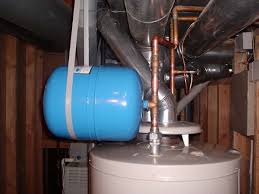
thermal expansion tank support

See Part 2 for the calculation of the expansion tank volumes. Now, using the calculated acceptance volume and the tank’s total volume, select an expansion tank from the manufacturer’s data that meets these requirements.

Be aware that in most states, unfired pressure vessels larger than a certain volume must have an ASME stamp. Check your state’s requirement for this limit. If the expansion tank you need exceeds this limitation, it must be constructed in accordance with the requirements of ASME Section VIII. ASME-rated vessels are much higher in cost than non-ASME vessels. Installing multiple smaller tanks, which are below the volume limitation for ASME tanks, is also an option. Most tank manufacturers offer both ASME and non-ASME thermal expansion tanks.

[Read more…]
Filed Under: Hot Water Systems, Plumbing Systems, Water Heaters Tagged With: thermal expansion tanks

Thermal Expansion Tanks: Part 2 – Sizing

July 31, 2015 by Roger W. Griffith, P.E. 1 Comment

How To Size Thermal Expansion Tanks For Hot Water Systems – Part 2 of a 3-part series.

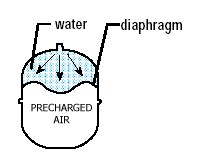
thermal expansion tank

In Part 1 of this series, we looked at where thermal expansion tanks are needed. When it is determined that a tank should be included in the plumbing system, the next task is to select the correct tank size. Referring to sizing tables in an expansion tank manufacturer’s catalog is the easiest method, although not the best method, for sizing thermal expansion tanks. Sizing tables provided by the manufacturers give the tank model number and size based on the water heater’s volume and the system supply pressure. These tables, however, are based on three important assumptions that designers need to be aware of.

First, for most manufacturers, the tables are based on a maximum allowable line pressure of 150 psi. This is the maximum allowable working pressure of most water heaters and thermal expansion tanks. It is also the setting of the water heater relief valve. In other words, the thermal expansion tank, if selected by the tables, could accommodate the thermal expansion up to a system pressure of 150 psi, which is the relieving point for the water heater relief valve. Remember that the purpose of the thermal expansion tank is to prevent the relief valve from relieving. Sizing the thermal expansion tank for a maximum allowable pressure of 135 psi, which is 10% below the relief valve set point, is a better alternative.

[Read more…]

Filed Under: Hot Water Systems, Plumbing Systems, Water Heaters Tagged With: thermal expansion tanks

Are Thermal Expansion Tanks Needed With Tankless Water Heaters?

June 21, 2015 by Roger W. Griffith, P.E. 17 Comments

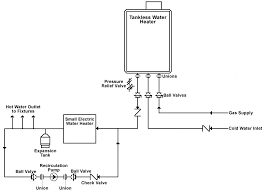
tankless water heater schematic with hot water recirculation

Thermal expansion tanks are typically installed in conjunction with storage water heaters, but are they needed with tankless water heaters? This issue can sometimes be overlooked. Let’s look at the specifics.

[Read more…]

Filed Under: Hot Water Systems, International Plumbing Code, Water Heaters Tagged With: thermal expansion tanks

Thermal Expansion Tanks: Part 1 – The Need

June 20, 2015 by Roger W. Griffith, P.E. 5 Comments

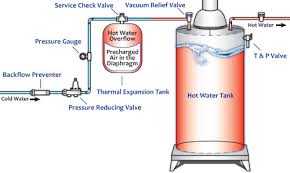
thermal expansion tank with water heater

When are thermal expansion tanks needed and/or required in plumbing systems?

When heated, water expands. We know that. When the water heater heats water, it expands as much as possible. But what happens when a water heater heats water, and there is no subsequent hot water usage?

This can occur after a period of showering/bathing during peak times, followed by a period of no hot water usage. For example, hot water usage for showering in the evenings, followed by a period of no use while people sleep at night.

During peak usage, hot water stored in the water heater is distributed to end users, while cold water refills it. The cold water in the tank is heated, but when there is no subsequent hot water use, the heated water has no room to expand. If there is no place for the expanded water to go, the system pressure increases significantly. This leads to one of two possible scenarios:

[Read more…]

Filed Under: Hot Water Systems, International Plumbing Code, Plumbing Systems, Water Heaters Tagged With: thermal expansion tanks

Water Heater T&P Relief Valve Installation Requirements

September 18, 2014 by Roger W. Griffith, P.E. Leave a Comment

Water Heater T&P relief valve discharge piping, installed incorrectly

If you stay in this business long enough, you see a bit of everything. Notice the water heater’s T&P valve in the above photograph. The T&P valve discharges vertically upward. What’s wrong with that?

There are many specific code requirements (13 to be exact) for the discharge piping from water heater T&P valves (Ref: 2012 International Plumbing Code 504.6). This installation violates requirements 8 and 9, which are:

8.  Not be trapped.

9. Be installed so as to flow by gravity.

Obviously, with this incorrect installation, the discharge cannot flow by gravity. Also, water can fill and remain in the discharge pipe. Over time, stagnant water in the discharge pipe can corrode it and cause it to fail.

The International Plumbing Code Section 504.6 contains 13 specific requirements for T&P relief valve discharge piping. Common violations beyond the upward discharge shown here include:

  • Discharge piping that terminates in an unsafe location
  • Incorrect pipe material for discharge piping
  • Improper pipe diameter
  • Missing air gap at discharge termination
  • Discharge piping that is threaded on the outlet end

Each of these violations creates a potential safety hazard. When a T&P relief valve activates, scalding water or steam discharges through the pipe. Improper installation can direct that discharge toward occupants or into areas where it causes property damage.

This is just a reminder. During field inspections, check the discharge pipe to verify code compliance.


Suggest topics for future blog posts.

Filed Under: Hot Water Systems, International Plumbing Code, Plumbing Systems, Water Heaters Tagged With: T&P relief valves

Contact Me

Roger W. Griffith, P.E.
(865) 471-8142
RGriffith@GriffithEngineering.net

Get all the latest content delivered to your inbox. (No spam; I promise)

See more content from Roger

[smbtoolbar]

Recent Posts

  • Flexible Ducts versus Flexible Connectors
  • Sanitary Tees in Plumbing Drains – Correct Usage
  • Trap Seal Devices — Plumbing Code Requirements

Categories

  • HVAC Systems (6)
    • Carbon monoxide poisoning (1)
    • Gas appliances (1)
    • International Mechanical Code (3)
  • Plumbing Systems (13)
    • Hot Water Scalding (2)
    • Hot Water Systems (8)
    • International Fuel Gas Code (2)
    • International Plumbing Code (8)
    • Legionella (1)
    • Water Heaters (5)
  • Recent Posts (3)
  • Sprinkler Systems (2)

Roger W. Griffith, P.E.
P.O. Box 702
Jefferson City, TN 37760
(865) 471-8142

Email: rgriffith@griffithengineering.net

Site Links

  • Home
  • About Roger
  • Engineering
  • Expert Witness
  • Technical Notes
  • Privacy Policy
  • Contact

What can we help you find?

See more content

[smbtoolbar]

Copyright © 2026 · Agency Pro Theme on Genesis Framework · WordPress · Log in