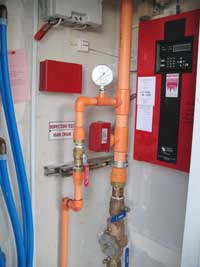
For residential occupancies, an NFPA 13R sprinkler system is permitted, and it offers numerous economic advantages for the building owner. Most notably, with a 13R system, attics and concealed spaces do not have to be protected with sprinklers.
But, be careful! Although the building codes permit a 13R system for residential occupancies, it is not permitted when the Architect uses a 13 system for trade-offs with other code requirements.
Specifically, check with the Architect to ensure that an NFPA 13 system was not used to comply with other building code requirements. Here are two examples where the International Building Code allows tradeoffs for NFPA 13 sprinkler systems:
2012 International Building Code
- Table 601 – Fire-Resistance Rating Requirements For Building Elements. Here, a 13 system can be used in lieu of fire resistance ratings.
- Paragraph 504.2 Automatic Sprinkler System Increase. A 13 system can increase the allowable area by 200%.
Common situations where this code violation occurs are when an NFPA 13 system is the design basis and an NFPA 13R system is substituted later in the project:
- Architects specifying a 13R system after using an NFPA 13 system for corridor width reductions
- Designers using a 13R system after trading off NFPA 13 requirements for occupant load calculations
- Building owners are substituting a 13R system during value engineering without understanding the code implications
When this violation is discovered during litigation, it raises serious questions about design professional liability and code compliance. The building official’s acceptance of the 13R system does not necessarily protect the design team if the system was improperly specified.
NFPA 13R sprinkler systems offer many advantages, but proceed with caution. Do your due diligence on the front end of a project.
For suggestions on future blog posts, make a suggestion.
Leave a Reply